



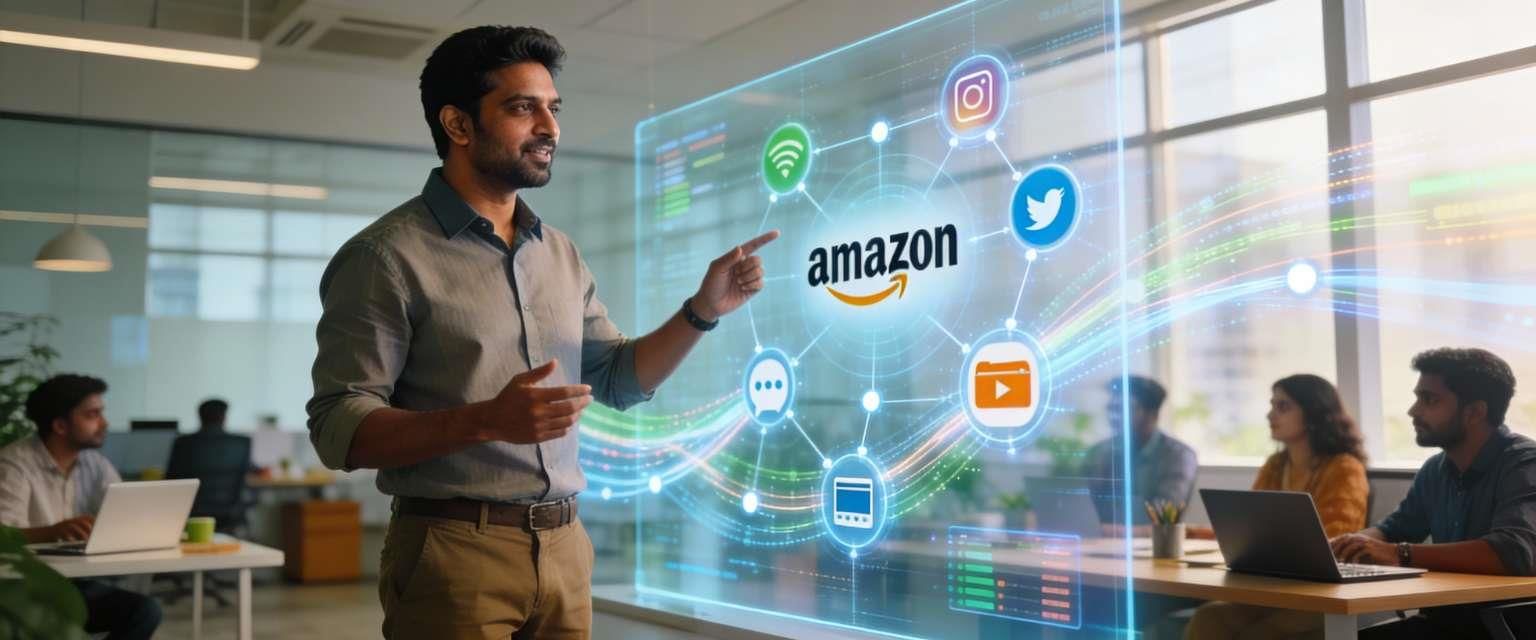
eCommerce Marketplace Trends 2026: Multi-Channel Selling Strategies for Indian Brands
The Indian eCommerce landscape is evolving at breakneck speed, with multi-channel selling no longer being optional but essential for brand survival. As we approach 2026, Indian brands must navigate the complexities of quick commerce, AI-driven automation, unified inventory management, and omnichannel integration to stay competitive. This comprehensive guide explores the key marketplace trends shaping 2026 and provides actionable multi-channel selling strategies that Indian brands can implement to thrive in this dynamic environment.
The New Reality of Indian eCommerce: Beyond Single-Channel Selling
The days when Indian brands could rely solely on a single marketplace or their own website are long gone. As India's eCommerce market races toward the projected USD 163 billion mark by 2026, the winners will be those brands that master the art of multi-channel presence while maintaining operational efficiency and profitability.
Recent industry analysis reveals a fundamental shift: 84% of B2B buyers now demand that suppliers offer multiple channels, including webstores, marketplaces, physical stores, and telesales. For D2C brands, the definition itself has evolved. It's no longer about the channel of origin but about control over consumer data, product positioning, distribution networks, and unit economics across every touchpoint.
What makes 2026 particularly challenging is the sheer complexity of managing multiple channels simultaneously. Brands must now orchestrate presence across Amazon, Flipkart, Myntra, their own websites, quick commerce platforms like Blinkit and Zepto, social commerce channels, and offline retail—all while ensuring consistent branding, synchronized inventory, and unified customer experience.
Trend #1: Quick Commerce Becomes Non-Negotiable
Quick commerce, or Q-commerce, has transformed from an experimental channel to a mandatory presence for Indian brands. The numbers tell a compelling story: India's quick commerce sector, valued at USD 5.38 billion in 2025, is projected to explode to USD 35 billion by 2030, representing a compound annual growth rate that no brand can afford to ignore.
By 2026, urban consumers will expect 60% of their purchases to arrive within 30 minutes. Platforms like Blinkit, Zepto, Instamart, and Swiggy Minutes have fundamentally rewired consumer expectations around convenience and speed. Even traditional eCommerce giants like Myntra with its 30-minute delivery and Flipkart Minutes have entered the race, validating quick commerce as the future of urban retail.
Strategic Implications for Indian Brands:
For brands targeting tier-1 and tier-2 cities, quick commerce readiness demands a complete operational overhaul. This means prioritizing high-velocity SKUs, implementing tight replenishment cycles (every 24-48 hours), and ensuring real-time inventory synchronization with dark stores. The challenge isn't just about being present on these platforms; it's about maintaining consistent stock availability, managing expiry dates for perishables, and optimizing packaging for rapid fulfillment.
The question isn't whether quick commerce will dominate—it's whether your brand is operationally ready to compete in this channel. Brands that master quick commerce logistics, inventory placement, and platform-specific requirements will capture disproportionate market share in urban markets.
Managing quick commerce alongside traditional marketplaces requires sophisticated backend systems. This is where comprehensive eCommerce account management services become invaluable, helping brands navigate multi-platform inventory synchronization, listing optimization, and fulfillment coordination across both traditional and quick commerce channels.
Trend #2: AI-Driven Automation Moves from Pilot to Production
Artificial Intelligence in eCommerce has crossed the experimental threshold and is now reshaping core operational workflows. By 2026, AI will no longer be a competitive advantage—it will be table stakes for brands aiming to compete at scale.
Where AI Creates Measurable Impact:
- Demand Forecasting: Machine learning algorithms analyze historical sales data, seasonality patterns, regional trends, and even external factors like weather and local events to predict demand with unprecedented accuracy. This reduces both stockouts and excess inventory carrying costs.
- Dynamic Pricing Intelligence: AI monitors competitor pricing changes in real-time across multiple marketplaces, automatically adjusting prices to maintain competitiveness while protecting margins.
- Visual Search and Discovery: Consumers are increasingly using images rather than keywords to search for products. AI-powered visual search converts browsing behavior into purchase intent.
- Automated Content Generation: Creating unique, optimized product listings for multiple marketplaces is time intensive. AI tools can now generate SEO-optimized titles, descriptions, and bullet points tailored to each platform's requirements.
For brands managing hundreds or thousands of SKUs across multiple channels, the operational burden of content creation is immense. Tools like BulkListing leverage AI to generate marketplace-specific content at scale, helping brands maintain consistent quality across Amazon, Flipkart, Myntra, Nykaa, and other platforms while dramatically reducing time-to-market for new products.
Industry leaders acknowledge that while we're still early in AI adoption, the impact will be "exponential, not linear." Smart brands are investing now in AI-ready data architecture—structured product information, clean inventory data, and integrated systems—so they're positioned to capitalize as AI capabilities mature.
Trend #3: Unified Inventory Management Becomes Critical
The proliferation of sales channels has created a new operational nightmare: inventory chaos. Brands selling across marketplaces, their own website, offline stores, quick commerce platforms, and B2B channels often struggle with overselling, stockouts, and inefficient capital allocation.
By 2026, unified inventory systems will separate winners from losers. The concept is straightforward but technically challenging: a single source of truth for all inventory that synchronizes in real-time across every channel, location, and fulfillment point.
The Business Case for Unified Inventory:
- Eliminates Overselling: Real-time synchronization prevents selling products that are out of stock, protecting marketplace ratings and customer trust.
- Enables Omnichannel Experiences: Customers can buy online and pick up in-store (BOPIS), check real-time availability across locations, and enjoy flexible return options.
- Optimizes Working Capital: Unified visibility prevents both overstocking (which ties up capital) and understocking (which loses sales).
- Improves Regional Fulfillment: Smart inventory placement based on regional demand patterns reduces delivery times and shipping costs.
The challenge is integration complexity. Modern brands need systems that connect warehouse management, order management, marketplace APIs, POS systems, and quick commerce platforms. For textile, fashion, and apparel brands specifically, this complexity multiplies with size variations, color options, and seasonal inventory rotations.
Efficient inventory management across channels also requires robust website development and maintenance services that ensure your owned digital properties integrate seamlessly with third-party marketplaces and inventory systems, creating a unified backend infrastructure that supports multi-channel operations.
Trend #4: Owned Channels Take Strategic Priority
While marketplaces and quick commerce platforms provide rapid growth and customer acquisition, 2026 will see smart brands doubling down on owned channels—their own websites, mobile apps, and offline stores.
The strategic rationale is compelling. Marketplaces prioritize their own interests, not individual brand interests. Algorithms favor certain products over others, visibility is often pay-to-play, and customer data remains largely inaccessible. As India's Digital Personal Data Protection (DPDP) regulations tighten, relying exclusively on third-party platforms becomes increasingly risky.
The Owned-Channel Advantage:
- Customer Data Ownership: Direct relationships enable personalized marketing, repeat purchase optimization, and lifetime value management.
- Brand Control: Complete control over brand narrative, customer experience, and visual identity without platform constraints.
- Margin Protection: No marketplace commissions mean healthier unit economics, especially crucial as brands scale.
- First-Party Data: In a privacy-first world, first-party data from owned channels becomes increasingly valuable for targeting and personalization.
Industry experts note that for brands scaling beyond INR 100-300 crore, a significant percentage (typically 25-30%) of revenue should come from owned channels to achieve sustainable economics and category leadership.
Building a high-converting owned channel requires more than just a website. It demands integrated social media marketing to drive traffic, performance marketing to optimize acquisition costs, and influencer marketing to build brand credibility and authentic connections with target audiences.
The complementary model works best: use marketplaces and quick commerce for discovery and convenience, while nurturing long-term customer relationships through owned channels where margins are protected and data is owned.
Trend #5: Omnichannel Complexity Demands Operational Maturity
The shift from multichannel to true omnichannel represents one of the most significant operational challenges facing Indian brands in 2026. The difference is critical: multichannel means being present on multiple platforms; omnichannel means delivering a seamless, integrated experience across all touchpoints.
Omnichannel Complexity Drivers:
- Channel Attribution: When a customer discovers your product on Instagram, research on your website, and purchases on Amazon, which channel gets credit? Traditional attribution models break down in omnichannel environments.
- Inventory Synchronization: Real-time stock visibility across online and offline channels is technically challenging but customer expected.
- Unified Customer View: Creating a single customer profile that tracks behavior across all touchpoints requires sophisticated data integration.
- Channel-Specific Optimization: Each platform has unique algorithms, customer expectations, and performance metrics that require specialized strategies.
Industry analysis confirms that true omnichannel—where customers can seamlessly buy online and fulfill from any nearby store, or vice versa—remains "a work in progress" even for sophisticated players. Most brands have achieved basic multi-platform presence but struggle with the backend integration required for genuine omnichannel experiences.
For early-stage D2C brands, 70-80% of revenue typically comes from quick commerce, while scaled brands (INR 100-300 crore range) should target 25% offline contribution. Managing this channel complexity while maintaining profitability requires disciplined execution across sales, supply chain, marketing, and technology.
Managing complex omnichannel operations often requires centralized project coordination. Tools like TaskFlow help teams coordinate cross-functional initiatives, track channel-specific performance, and ensure nothing falls through the cracks as operational complexity increases.
Trend #6: Margin Discipline Replaces Growth-at-All-Costs
Perhaps the most fundamental shift in India's eCommerce landscape is the industry-wide pivot from growth-obsessed to margin-conscious. The era of burning capital to acquire market share is definitively over. Investors, operators, and industry analysts now agree unless brands demonstrate sustainable unit economics, even consolidations and exits become difficult.
The New Margin Framework:
Industry experts point to three critical metrics that will determine valuations and survival in 2026:
- Gross Margin: D2C brands generally need 50-70% gross margins to sustain multiple channels while moving toward contribution positivity. Anything below 50% makes long-term sustainability questionable.
- CM2 (Contribution Margin 2): This measures profitability after all direct expenses, including marketing and fulfillment. It's the most honest indicator of channel economics.
- EBITDA Path: Investors now demand clear paths to steady-state EBITDA, with milestones and realistic timelines.
For physical retail expansion, the discipline is even more stringent: rent ratios of 10-15%, inventory discipline, and store-level EBITDA targets of 5-10%. Few brands have the operational DNA to execute profitably across both digital and physical retail.
The implication for Indian brands is clear: channel expansion must be economically justified. Adding marketplaces, launching quick commerce, or opening offline stores should demonstrate clear paths to positive contribution margins within defined timeframes. The winning formula isn't growth velocity; it's profitable growth with sustainable unit economics across all channels.
Trend #7: Premium-Affordable Convergence Reshapes Product Strategy
One of the most interesting consumer behavior trends emerging in India is what industry observers call "customer duality"—the simultaneous pursuit of premium products in aspirational categories while seeking maximum value in everyday essentials.
Amazon India reports that smartphones above INR 20,000 grew nearly 50% year-over-year, alongside robust demand for premium apparel, jewelry, and smartwatches. Simultaneously, value-focused segments targeting tier-2/3 buyers and Gen Z consumers recorded strong growth.
The Geographic Democratization of Premium:
A critical insight often overlooked: India's top 20% of households—the real consumption segment—are evenly split between urban and rural markets. Lower cost of living in tier-3 and tier-4 cities means that after essential expenses, consumers in smaller towns often enjoy larger discretionary spending power than their metro counterparts.
This democratization is fueled by universal access to digital content. Exposure to aspirational products and lifestyles is no longer confined to urban areas, creating brand awareness and demand across geographies.
Strategic Implications:
For premium brands, the challenge is moving from pricing-based to curation-based positioning. In categories like ethnic wear, athleisure, and artisan products, the value proposition lies in sourcing unique products and building backend ecosystems that can scale while maintaining exclusivity.
For value brands, the opportunity is reaching previously underserved markets through marketplace presence and vernacular content. Over 73% of internet subscribers in India prefer content in regional languages, making vernacular digital marketing a growth imperative.
Whether targeting premium or value segments, understanding your audience deeply is critical. Free tools like those available at Emerge's 50 Free Tools can help brands analyze customer segments, calculate unit economics, and forecast demand patterns across different market segments.
Multi-Channel Selling Strategy Framework for 2026
Based on these trends, here's a practical framework Indian brands can implement to build effective multi-channel strategies:
Phase 1: Foundation (Months 1-3)
- Audit Current State: Conduct comprehensive inventory accuracy audits, assess channel performance, and identify margin leakage points.
- Integrate Systems: Implement or upgrade OMS (Order Management System) and WMS (Warehouse Management System) to enable real-time inventory visibility.
- Structure Product Data: Clean and structure all product information (SKU attributes, variants, pricing, images) for AI-ready systems.
- Define Channel Strategy: Based on product categories, margins, and target customers, determine which channels warrant investment.
Phase 2: Quick Wins (Months 4-6)
- Optimize Existing Channels: Before adding channels, maximize performance on existing platforms through listing optimization, pricing strategy, and advertising.
- Launch Quick Commerce Pilot: Select high-velocity SKUs and test quick commerce with one platform to understand operational requirements.
- Implement Content Automation: Adopt AI-powered tools to scale content creation across marketplaces, reducing time-to-market for new products.
- Establish Owned Channel: If not already present, launch or optimize brand website with commerce capabilities and integrate with social media for traffic generation.
Phase 3: Scale (Months 7-12)
- Expand Quick Commerce: Based on pilot learnings, scale to additional quick commerce platforms with optimized replenishment processes.
- Launch Omnichannel Capabilities: Implement BOPIS, unified returns, and cross-channel inventory visibility.
- Build Marketing Engine: Create integrated campaigns across paid, owned, and earned media that drive traffic to all channels strategically.
- Invest in Automation: Deploy AI for demand forecasting, dynamic pricing, and personalized customer engagement.
Phase 4: Optimization (Ongoing)
- Monitor Channel Economics: Regularly assess CM2 and EBITDA contribution by channel, eliminating or fixing underperforming channels.
- Test and Learn: Continuously experiment with new channels, features, and strategies based on data-driven insights.
- Deepen Customer Relationships: Use owned channels to build community, loyalty programs, and repeat purchase mechanisms that reduce dependency on paid acquisition.
Preparing for Regulatory and Competitive Headwinds
The path forward isn't without challenges. Indian brands must navigate several headwinds in 2026:
Regulatory Complexity: GST rule changes, FDI compliance for marketplaces, and evolving state-level eCommerce regulations create ongoing compliance burdens. Brands need legal and operational expertise to stay compliant across channels.
Competition Intensity: With marketplace giants entering quick commerce and vertical specialists launching niche platforms, competitive pressure will intensify. Differentiation through product curation, customer service, or community building becomes critical.
Profitability Pressure: Quick commerce platforms themselves remain unprofitable, and marketplace commission rates continue rising. Brands must ruthlessly manage unit economics while maintaining growth.
Funding Constraints: As one Blinkit executive warned, the quick commerce sector may face "sharp correction" as funding tightens. Brands over-indexed to any single channel face concentration risk.
The winners will be brands that build resilient, diversified channel strategies with strong margin foundations—those that can weather platform-specific challenges without existential risk to the overall business.


