




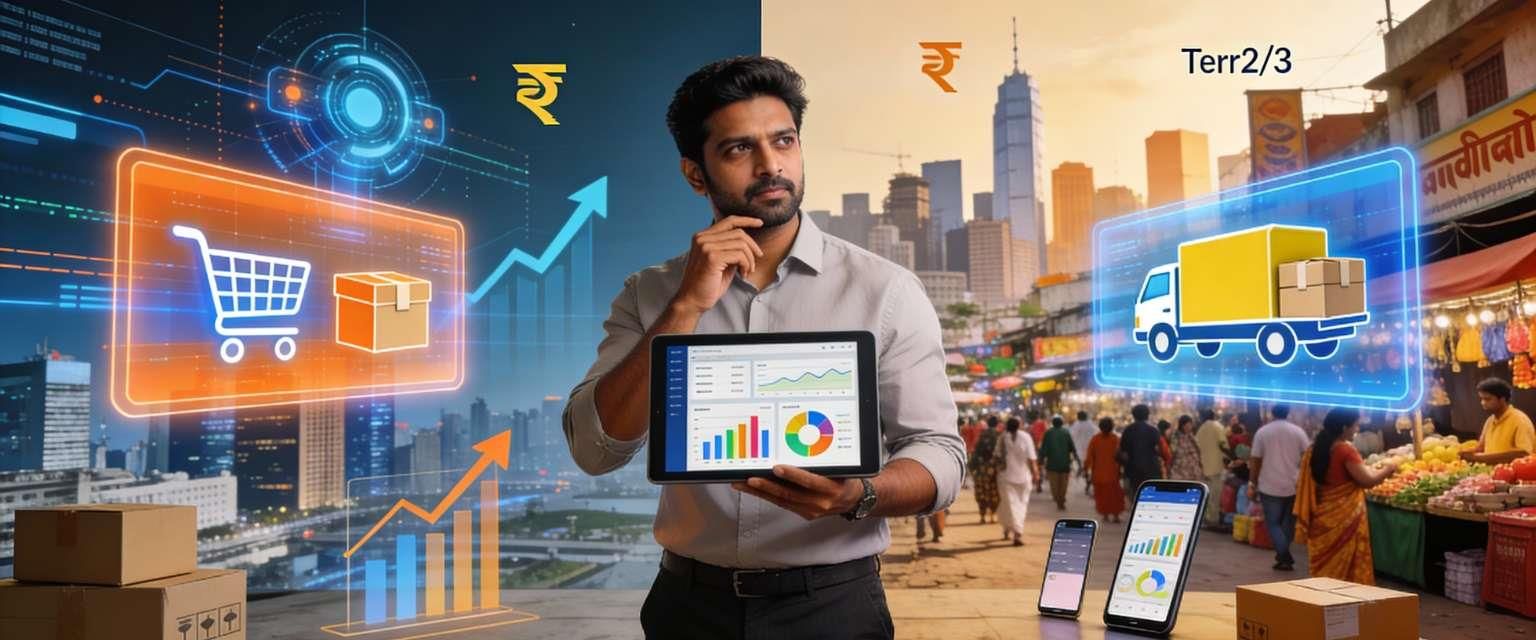
Amazon vs Flipkart: Which Marketplace Is Better for Indian Sellers in 2026?
The Indian e-commerce landscape is evolving rapidly as we approach 2026. With Amazon implementing AI-powered automation tools and Flipkart revolutionizing seller economics through its zero-commission model, Indian sellers face a critical decision: which marketplace deserves their primary focus? This comprehensive guide analyzes both platforms across fees, features, reach, and future potential to help you make an informed choice for your business growth in 2026.
The E-commerce Evolution: What 2026 Holds for Indian Sellers
India's e-commerce market is projected to exceed $163 billion by 2026, growing at a remarkable 27% compound annual growth rate. This explosive growth presents unprecedented opportunities for online sellers, but success increasingly depends on choosing the right marketplace partner. As we stand at the cusp of 2026, both Amazon and Flipkart have introduced game-changing features that fundamentally alter the seller value proposition.
The question isn't just about which platform has more traffic or lower fees anymore. It's about understanding which ecosystem aligns with your business model, product category, target audience, and growth aspirations. Let's dive deep into this comparison to help you navigate this critical decision.
Commission Structure: The New Battleground
Flipkart's Revolutionary Zero-Commission Model
In a strategic move that sent shockwaves through the industry in November 2025, Flipkart introduced its zero-commission model for all products priced below ₹1,000. This bold initiative, extended across its entire Shopsy platform, can reduce seller costs by up to 30%, fundamentally changing the economics for small and medium-sized businesses.
For sellers dealing with fashion accessories, home essentials, beauty products, and other items in the sub-₹1,000 category, this translates to substantial savings. Previously, commission rates ranged from 6-7% and could climb to 15% depending on the category. Eliminating these fees for lower-priced items means sellers can either improve margins or pass savings to customers for competitive pricing.
Amazon's Strategic Fee Reduction
Amazon India responded with its own fee structure optimization in 2025, introducing zero referral fees for products priced below ₹300 across 135+ categories. Additionally, they reduced apparel commission fees from 15% to 11% for items priced between ₹500 and ₹1,000. While Amazon's threshold is lower than Flipkart's, it still provides meaningful relief for sellers in specific categories.
The Verdict: Flipkart takes the lead on commission savings for products under ₹1,000, while Amazon offers benefits for ultra-low-priced items and select categories. Your choice should align with your average selling price and product mix.
Market Reach and Customer Demographics
Flipkart's Dominance in Indian Households
Flipkart commands an impressive 48% market share of India's e-commerce market as of recent data, significantly ahead of Amazon's 26%. The platform reported $23 billion in gross sales in 2021, demonstrating its deep penetration into Indian markets. Flipkart's strength lies in its regional personalization and understanding of Indian consumer psychology, particularly in tier-2 and tier-3 cities were vernacular language support and localized payment options matter significantly.
Amazon's Global Brand Trust and Prime Advantage
Despite lower market share, Amazon's global brand recognition provides unmatched credibility, especially for premium products and electronics. Amazon Prime's delivery infrastructure and subscription ecosystem create a loyal, high-spending customer base. For sellers targeting metro cities and customers willing to pay premium prices for assured quality and fast delivery, Amazon's platform offers superior conversion rates.
The Verdict: Choose Flipkart for mass-market appeal and broader Indian reach, especially in tier-2/3 cities. Opt for Amazon when targeting premium customers and building long-term brand credibility.
Technology and Automation: The AI Revolution
Amazon's AI-Powered Seller Tools
Amazon has announced a massive $12.7 billion AI investment in India, bringing sophisticated agentic-AI tools to help sellers manage inventory, create optimized listings, and automate advertising campaigns. Their generative AI listing tool allows sellers to create product descriptions from just a few keywords, images, or existing website URLs, dramatically reducing content creation time.
This technological edge becomes crucial when managing hundreds or thousands of SKUs. However, even with Amazon's native tools, many sellers find themselves needing additional solutions for bulk operations and cross-platform management.
The Content Creation Challenge
Whether you're selling on Amazon, Flipkart, or both, creating high-quality, SEO-optimized product listings at scale remains one of the biggest operational challenges. This is where specialized tools make a dramatic difference in seller productivity. Bulk Listing Creator by Emerge addresses this pain point by enabling sellers to generate professional, marketplace-compliant content for multiple platforms simultaneously including Amazon, Flipkart, Shopify, WooCommerce, Walmart, Myntra, and Nykaa.
The tool allows you to create templates with reference content, upload Excel or CSV files with product specifications, and generate SEO-rich titles, descriptions, bullet points, and keywords in bulk. This capability is particularly valuable in 2026 as competition intensifies and listing quality becomes a critical differentiator. By automating content generation, sellers can focus on strategic activities like pricing optimization, customer service, and inventory planning rather than spending hours on repetitive content creation tasks.
Flipkart's Technology Offerings
Flipkart provides robust seller dashboard features through its Seller Hub app, enabling order management, inventory tracking, advertising, and business insights. While not as AI-forward as Amazon's offerings, Flipkart's tools are intuitive and designed specifically for Indian seller needs. The platform's focus has been on simplifying operations rather than overwhelming sellers with complex automation.
The Verdict: Amazon leads in AI sophistication, but the real winner is sellers who leverage third-party tools like Bulk Listing Creator to maximize efficiency across both platforms simultaneously.
Fulfillment and Logistics: The Delivery Experience
Amazon's FBA Advantage
Fulfillment by Amazon (FBA) remains one of the most reliable logistics networks in India, with exceptional delivery speeds in metro areas and Amazon Prime's 1–2-day delivery promise. For products requiring stringent quality control and fast fulfillment, FBA provides peace of mind. However, FBA fees have increased in 2025, with storage costs rising and new fee structures implemented from November 2025.
Flipkart's Fulfillment Network
Flipkart's fulfillment services have improved significantly, with competitive delivery timelines and extensive reach into smaller towns and villages. The platform's logistics arm, eKart, has built strong last-mile connectivity across India. Flipkart also offers more flexibility in fulfillment options and generally charges lower storage fees compared to Amazon.
The Verdict: For urban, time-sensitive deliveries, Amazon FBA is superior. For cost-effective fulfillment with broader geographic reach, especially in smaller cities, Flipkart performs admirably.
Payment Terms and Cash Flow Management
Cash flow can make or break small businesses, and payment cycles play a crucial role in operational sustainability. Flipkart typically processes payments within 7 days of order delivery, while Amazon's payment cycle can extend to 7-14 days depending on various factors. For sellers managing thin margins or requiring quick capital turnover, Flipkart's faster payment schedule provides a meaningful advantage, potentially boosting cash flow by 40% as some industry analysts suggest.
Additionally, managing finances across multiple sales channels requires sophisticated tools for forecasting and planning. Emerge's suite of 50+ free tools includes calculators for GST, cash flow forecasting, marketplace profit calculation, and shipping cost estimation—all essential for maintaining healthy business operations regardless of which marketplace you choose.
Advertising and Visibility
Amazon's Sophisticated Advertising Platform
Amazon's advertising ecosystem offers sponsored products, sponsored brands, and sponsored display ads with granular targeting options and robust analytics. The platform's algorithm-driven ad placement typically delivers strong ROI for sellers willing to invest in understanding the system. However, advertising costs on Amazon have been rising, with some categories becoming prohibitively expensive for smaller sellers.
Flipkart's Growing Ad Platform
Flipkart's advertising platform has matured significantly, offering competitive CPCs (cost per click) generally lower than Amazon's. The platform provides ad credits and promotional opportunities, particularly for new sellers and during major sale events. For budget-conscious sellers, Flipkart's advertising often delivers better cost efficiency, though with somewhat less sophisticated targeting compared to Amazon.
The Verdict: If you have significant ad budgets and expertise in performance marketing, Amazon's advanced platform offers precision. For cost-effective visibility with reasonable results, Flipkart provides better entry-level options.
For sellers managing campaigns across both platforms, Emerge's performance marketing services can help optimize spending and maximize returns through data-driven strategies tailored to each marketplace's unique characteristics.
Category-Specific Recommendations
Best Categories for Amazon:
- Electronics and gadgets
- Premium fashion and international brands
- Books and media
- High-ticket items (₹3,000+)
- Products requiring brand registry protection
Best Categories for Flipkart:
- Indian ethnic wear and fashion
- Home and kitchen essentials
- Beauty and personal care
- Budget smartphones and accessories
- Products targeting tier-2/3 city customers
Building Your Multi-Channel Strategy
Rather than viewing this as an either-or decision, successful sellers in 2026 are increasingly adopting omnichannel strategies, maintaining presence on both platforms while potentially expanding to other marketplaces like Meesho, Myntra, or even their own Shopify stores.
Managing multiple sales channels efficiently requires robust e-commerce account management capabilities. From inventory synchronization and pricing updates to customer service and performance monitoring, the operational complexity multiplies with each additional platform. This is where specialized e-commerce management services become invaluable, allowing business owners to focus on product development and growth strategy while experts handle the day-to-day marketplace operations.
For sellers ready to diversify beyond marketplaces, establishing a branded website provides long-term value by building direct customer relationships and capturing first-party data. Emerge's website development and maintenance services help sellers create professional e-commerce sites that complement their marketplace presence, often resulting in higher margins and better customer lifetime value.
The Social Commerce Connection
In 2026, the lines between marketplaces and social media are blurring rapidly. Both Amazon and Flipkart are integrating social shopping features, but savvy sellers are taking control by building their own social media presence to drive marketplace traffic and brand loyalty.
Strategic social media marketing has become essential for marketplace success, with sellers using Instagram, Facebook, and YouTube to showcase products, build communities, and drive qualified traffic to their listings. This owned-channel approach reduces dependency on marketplace algorithms and creates direct relationships with customers who might otherwise remain anonymous.
Complementing organic social media efforts, influencer marketing campaigns can dramatically accelerate brand awareness and drive significant marketplace traffic. Collaborating with micro and macro influencers in your niche creates authentic content that resonates with target audiences while providing social proof that increases conversion rates on marketplace listings.
Making the Decision: A Framework for 2026
Choose Amazon as your primary platform if:
- You sell premium or branded products with ASPs above ₹1,500
- Your target customers are primarily in metro cities and tier-1 towns
- Brand credibility and global platform association matter to your positioning
- You can invest in sophisticated advertising and are comfortable with data analytics
- Your products benefit from Amazon's specialized programs (Prime, Subscribe & Save, etc.)
Choose Flipkart as your primary platform if:
- Your products fall mostly in the ₹300-₹1,000 price range
- You target mass-market customers across tier-2 and tier-3 cities
- Cost efficiency and faster payment cycles are critical for your operations
- You sell fashion, home essentials, or categories where Flipkart has strong customer loyalty
- You prefer simpler operations with lower advertising complexity
The Best Strategy: Start with one platform, master it, then expand to the second while leveraging automation and management tools to maintain efficiency.


