




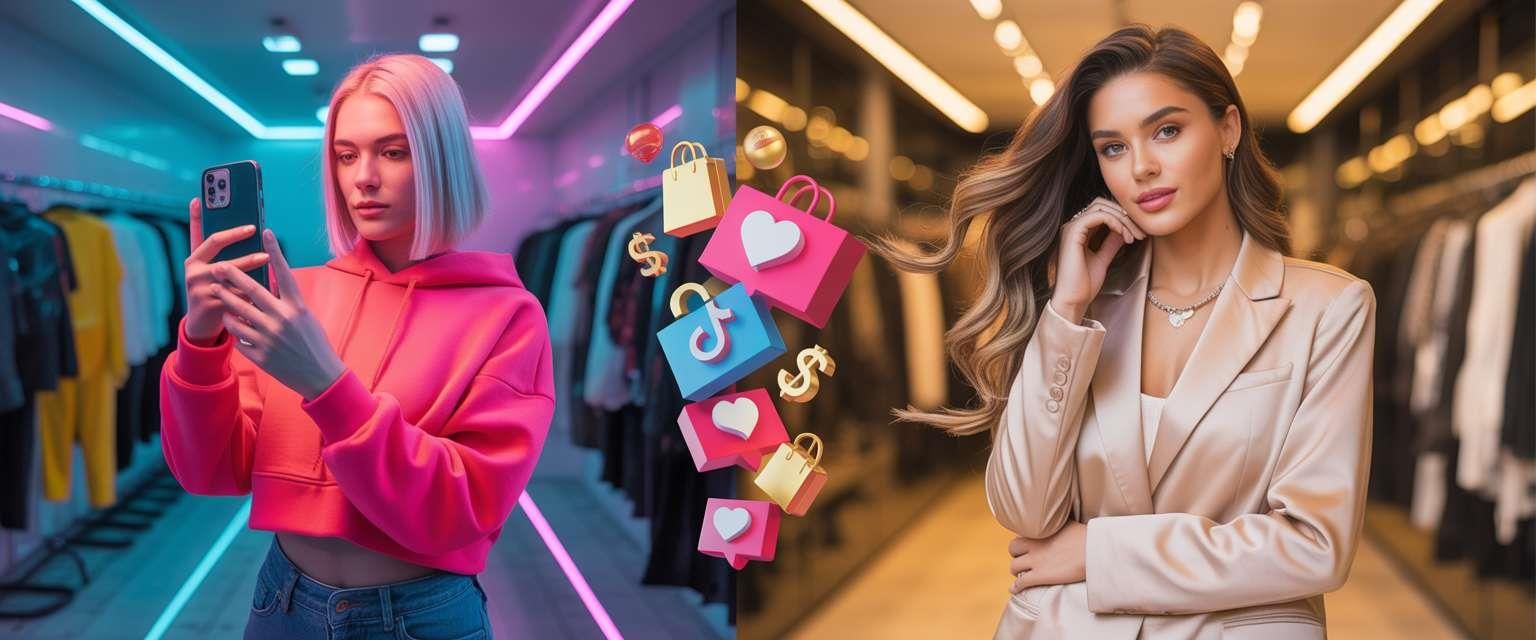
TikTok vs Instagram for Fashion Brands: Which Platform Drives More Sales in 2026?
The battle for social commerce supremacy intensifies as we head into 2026. Fashion brands face a critical decision: should they invest their marketing resources in TikTok's viral ecosystem or Instagram's established shopping infrastructure? This comprehensive guide analyzes conversion rates, audience demographics, platform features, and future trends to help fashion brands make data-driven decisions about where to focus their social selling strategies in 2026.
The Social Commerce Revolution in Fashion
The fashion industry stands at a pivotal crossroads in 2026. Social commerce has evolved from a supplementary sales channel to the primary battleground where fashion brands win or lose market share. With TikTok Shop generating $26 billion in global GMV by mid-2025 and Instagram maintaining its stronghold with over 2 billion active users, the question isn't whether to embrace social selling—it's which platform deserves your primary focus.
According to SQ Magazine, brands report a 32% higher ROI from influencer campaigns on TikTok compared to Instagram in 2025. However, Instagram's established shopping infrastructure and broader demographic appeal present compelling counterarguments. As we analyze projections for 2026, fashion brands must navigate this decision with precision, considering not just current performance but future trajectory.
The stakes have never been higher. McKinsey's State of Fashion 2026 report projects low single-digit growth for the global fashion industry, meaning every marketing dollar must work harder. Fashion brands can no longer afford to spread resources thin across multiple platforms without strategic intent. This analysis cuts through the noise to deliver actionable insights on where fashion brands should concentrate their efforts in 2026.
TikTok's Explosive Growth: The Numbers That Matter
Conversion Rates That Challenge Convention
TikTok has shattered traditional e-commerce benchmarks with conversion rates that seemed impossible just two years ago. Recent data from joinBrands reveals that TikTok shoppable videos achieve average conversion rates of 2-8%, with top performers in beauty and fashion exceeding 10%. Compare this to Instagram Shopping's 1.5-3.5% average conversion rate, and the gap becomes significant.
The most compelling statistic comes from The Short Media, which reports that TikTok Shop achieves 12% conversion rates on certain campaigns—well above industry standards. For fashion brands, this means that when TikTok content resonates, it converts at rates that fundamentally change ROI calculations. In H1 2025 alone, the US TikTok Shop achieved $5.8 billion in GMV, representing a 91% year-over-year increase.
The Algorithm Advantage for Fashion Discovery
TikTok's "For You Page" algorithm represents a paradigm shift in product discovery. Unlike Instagram's follower-based model, TikTok prioritizes content relevance over account size. This democratization means a boutique fashion brand with 500 followers can reach millions if their content resonates. Fashion brands like CeraVe and Wonderskin have experienced this phenomenon firsthand, with single viral videos generating months of sustained sales growth.
The algorithm favors authentic, unpolished content that feels native to the platform. Fashion brands that embrace this aesthetic—showing behind-the-scenes footage, authentic try-on sessions, and real customer reactions—significantly outperform those attempting to repurpose polished brand content. This aligns perfectly with Gen Z's preference for authenticity over perfection.
TikTok's Demographic Sweet Spot
With 38.5% of TikTok users aged 18-24 and 61% discovering new brands on the platform, TikTok owns the crucial Gen Z and young millennial demographics. For fashion brands targeting these segments, TikTok isn't optional—it's essential. Colorful Socks' research indicates that 45.5% of US TikTok users make purchases through the app, with users spending an average of 58.4 minutes daily on the platform.
This extended engagement time provides multiple touchpoints for fashion brands to build desire and drive purchase decisions. Unlike traditional e-commerce where purchase decisions happen in minutes, TikTok creates a browsing environment where users discover products organically through entertainment, leading to more impulse purchases and higher cart values.
Instagram's Enduring Strengths: Why It Still Matters
The Trust Factor in Luxury Fashion
While TikTok dominates in viral fashion moments, Instagram maintains an unshakeable position in luxury and aspirational fashion segments. Instagram Fashion Statistics 2025 shows that fashion brands on Instagram experience an engagement rate of around 1.8%—higher than many other industries. More importantly, Instagram excels at building the long-term brand equity that luxury fashion requires.
Instagram's visual-first platform naturally showcases fashion products in aspirational contexts. The ability to create cohesive brand aesthetics through grid layouts, Stories highlights, and Reels provides fashion brands with storytelling capabilities that TikTok's algorithm-driven feed cannot replicate. For brands where brand image is as important as product features, Instagram's format advantages remain significant.
Instagram Reels: The TikTok Challenger
Instagram hasn't conceded short-form video dominance to TikTok. Zebracat's research reveals that Instagram Reels campaigns yield an average conversion rate to website product pages of around 4.5%—higher than static posts at 1.8%. Reels featuring limited-time promotions achieve conversion rates averaging 5.2%, demonstrating that when executed strategically, Instagram can compete directly with TikTok on conversion metrics.
The key advantage? Instagram Reels benefit from the platform's established shopping infrastructure. Users can seamlessly transition from entertainment to purchase within the same ecosystem, leveraging saved payment information and familiar checkout processes. This friction reduction matters significantly in fashion, where purchase decisions often hinge on convenience.
Cross-Generational Reach for Fashion Brands
Instagram's 2+ billion users span demographics that TikTok cannot match. For fashion brands targeting women aged 25-45—a demographic with significant purchasing power—Instagram remains the primary platform. Nike, with over 305 million Instagram followers, demonstrates that the platform continues to drive massive brand awareness and sales for fashion leaders.
This broader demographic reach allows fashion brands to run lifecycle campaigns that nurture customers from awareness through repeat purchases. Unlike TikTok's predominantly younger audience, Instagram supports campaigns targeting established professionals, parents, and higher-income segments that drive premium fashion sales.
Platform Features Comparison: Sales Infrastructure in 2026
TikTok Shop's Seamless Integration
TikTok Shop has evolved into a sophisticated e-commerce platform that eliminates friction from the purchase journey. Users can complete entire transactions without leaving the app, browse curated collections, and receive personalized product recommendations based on their viewing behavior. For fashion brands, this seamless experience drives impulse purchases that traditional e-commerce funnels miss.
The live shopping feature on TikTok has become particularly powerful for fashion brands. Live stream shopping events create urgency and community engagement that static posts cannot replicate. Fashion brands hosting TikTok Live shopping sessions report conversion rates 3-5x higher than standard video posts, with real-time interaction answering customer questions and reducing purchase hesitation.
Instagram Shopping's Mature Ecosystem
Instagram Shopping offers fashion brands comprehensive features including product tagging, shoppable posts and Stories, Instagram Shop storefronts, and integrated checkout. The platform's maturity shows in sophisticated features like collections, product recommendations, and detailed analytics that help fashion brands optimize their social commerce strategies.
The recent integration improvements in 2025 have enhanced Instagram Shopping's performance significantly. According to Thistle Media, new tools for social selling and refined checkout processes have reduced cart abandonment and improved conversion rates. For fashion brands with existing e-commerce infrastructure, Instagram's ability to sync with Shopify and other platforms provides operational advantages that TikTok Shop is still developing.
Advertising Capabilities and ROI
Both platforms offer robust advertising solutions, but with different strengths. TikTok's advertising spend is expected to surpass $30 billion in 2025, outpacing even Instagram in retailer-focused campaigns. TikTok ads achieve an average conversion rate of 1-3%, with fashion and e-commerce campaigns often exceeding these benchmarks due to the platform's product discovery orientation.
Instagram's advertising infrastructure benefits from Facebook's decade of optimization. The platform offers sophisticated targeting options, retargeting capabilities, and integration with broader Meta advertising campaigns. For fashion brands running comprehensive performance marketing campaigns, Instagram's advertising tools provide granular control and optimization opportunities that justify its continued relevance.
Content Strategy Differences: What Works Where
TikTok's Viral Content Formula for Fashion
Success on TikTok requires fashion brands to embrace a fundamentally different content approach. The platform rewards authenticity, trend participation, and entertainment value over production quality. Fashion brands that treat TikTok like a traditional advertising channel consistently underperform those that embrace the platform's creative culture.
Effective TikTok fashion content includes styling challenges, transformation videos, behind-the-scenes manufacturing footage, customer testimonials and try-on sessions, and trend-based fashion interpretations. The key is creating content that users want to watch repeatedly and share, not content that simply showcases products.
Fashion brands struggling to maintain this content velocity can benefit from working with agencies specializing in social media management who understand platform-specific content creation. The alternative—treating TikTok as just another posting destination for recycled content—virtually guarantees poor performance.
Instagram's Aesthetic Excellence Standards
Instagram maintains higher visual standards than TikTok, requiring fashion brands to invest in quality imagery and cohesive brand aesthetics. The platform rewards carefully curated feeds, professional photography, and aspirational lifestyle content that positions fashion products within desirable contexts.
Successful Instagram fashion content strategies include high-quality product photography with consistent editing, reels that balance entertainment and product showcase, Stories that provide daily touchpoints and exclusive offers, and User-Generated Content (UGC) that builds social proof. Fashion brands can streamline UGC collection and management using specialized content creation services that maintain brand consistency while leveraging customer content.
The challenge for fashion brands is maintaining this content quality and consistency without overwhelming internal resources. Many successful fashion brands have adopted hybrid models where they handle strategic content in-house while outsourcing production execution to maintain posting frequency without sacrificing quality.
Influencer Marketing: Platform-Specific Approaches
TikTok's Micro-Influencer Economy
TikTok has democratized influencer marketing for fashion brands. Unlike Instagram where follower counts heavily influence pricing and perceived value, TikTok prioritizes engagement and authenticity. This creates opportunities for fashion brands to work with micro-influencers (10K-100K followers) who often deliver better ROI than macro-influencers.
Data from Click Analytic shows that TikTok micro-influencers charge $5,000-$20,000 per campaign, significantly less than their Instagram counterparts, while often achieving comparable or superior engagement rates. For fashion brands with limited influencer budgets, TikTok provides access to authentic voices that resonate with target demographics.
The key to TikTok influencer success is finding creators whose content style aligns with your brand aesthetic while giving them creative freedom to present products authentically. Fashion brands that over-script TikTok influencer content typically see disappointing results, as audiences quickly detect inauthentic sponsored content.
Instagram's Influencer Maturity
Instagram influencer marketing has evolved into a sophisticated ecosystem with established pricing structures, performance benchmarks, and contractual standards. Fashion brands benefit from this maturity through predictable results and professional creator relationships but face higher costs and increased competition for top-tier influencer attention.
Instagram influencers excel at creating aspirational content that positions fashion products within desirable lifestyles. Their ability to leverage multiple formats—feed posts, Reels, Stories, and IGTV—provides fashion brands with diverse content opportunities from single partnerships. For brands focusing on influencer marketing, Instagram's established infrastructure simplifies campaign management and performance tracking.
The challenge is breaking through the noise. With virtually every fashion brand leveraging Instagram influencers, differentiation requires either working with emerging creators before they reach premium pricing or developing exclusive partnership models that provide influencers with unique value beyond payment.
Data Analytics and Performance Tracking
Fashion brands need robust analytics to optimize their social commerce strategies. Both platforms offer analytics tools, but with different strengths and limitations that impact decision-making capabilities.
TikTok Analytics: Understanding Viral Performance
TikTok's analytics provide insights into video performance, audience demographics, and traffic sources, but lack the e-commerce depth that fashion brands need for comprehensive ROI analysis. The platform's rapidly evolving algorithm makes historical data less predictive than on more stable platforms, requiring fashion brands to maintain agility in their strategies.
Third-party analytics tools have emerged to fill TikTok's analytics gaps, providing enhanced tracking of sales attribution, customer journey analysis, and competitive benchmarking. Fashion brands serious about TikTok should invest in these supplementary tools to gain visibility into which content types and posting strategies drive sales versus merely generating views.
Instagram Analytics: E-commerce Integration
Instagram's analytics benefit from years of refinement and deep integration with Facebook's advertising platform. Fashion brands can track detailed customer journeys from impression through purchase, understand audience demographics with precision, and measure ROI at granular levels that inform optimization decisions.
The Instagram Shopping analytics specifically provide fashion brands with insights into product views, product clicks, and conversion funnels that enable data-driven inventory and merchandising decisions. This analytics depth makes Instagram particularly valuable for fashion brands operating data-driven businesses where merchandising decisions depend on real-time performance feedback.
Technology and Tools for Multi-Platform Success
Managing social commerce across TikTok and Instagram requires sophisticated tools and workflows. Fashion brands that attempt manual management quickly become overwhelmed by content demands, customer interactions, and performance optimization requirements.
Content Management and Scheduling
Fashion brands need content calendars that account for each platform's unique posting requirements while maintaining brand consistency. Tools like TaskFlow enable teams to plan, assign, and track content production across multiple platforms, ensuring that TikTok's high-velocity content demands don't compromise Instagram's quality standards.
The challenge is maintaining platform-specific optimization while achieving production efficiency. Fashion brands should avoid simply cross-posting identical content, as each platform's audience expectations and algorithm preferences differ significantly. Successful brands create core content assets that get adapted and optimized for each platform's specific requirements.
E-commerce Integration
For fashion brands selling across multiple platforms and marketplaces, maintaining inventory accuracy and order management becomes critical. Fashion brands can leverage e-commerce management services to synchronize inventory, fulfill orders efficiently, and maintain consistent product information across TikTok Shop, Instagram Shopping, and traditional e-commerce channels.
The alternative—manual management of multiple storefronts—inevitably leads to overselling, delayed fulfillments, and customer service issues that damage brand reputation. As social commerce grows, the technical infrastructure supporting it becomes as important as the content strategy itself.
Bulk Content Creation for Product Listings
Fashion brands with extensive product catalogs face challenges creating compelling product descriptions and marketing content at scale. Tools like BulkListing enable fashion brands to generate bulk content for Amazon and Shopify, ensuring consistent quality across hundreds or thousands of SKUs without consuming unlimited content creation resources.
This scalability is essential as fashion brands expand across platforms. Creating unique, optimized content for each product on each platform manually is unsustainable for brands with significant catalogs. Automation tools that maintain brand voice while scaling content production become competitive advantages.
2026 Predictions: Where Fashion Brands Should Focus
Looking ahead to 2026, several trends will shape the TikTok vs Instagram decision for fashion brands:
TikTok's Continued Momentum
TikTok Shop's trajectory suggests continued explosive growth through 2026. If current trends continue, TikTok Shop could reach $50+ billion in global GMV by end of 2026, establishing it as a top-tier e-commerce platform alongside Amazon and major marketplaces. Fashion brands that establish strong TikTok presences now will benefit from algorithmic advantages and audience loyalty as competition intensifies.
The platform's expansion into live shopping, enhanced creator tools, and improved logistics partnerships will reduce current friction points. Fashion brands should anticipate TikTok Shop becoming a full-featured e-commerce platform competitive with traditional online stores in functionality while maintaining entertainment-driven discovery advantages.
Instagram's Evolution
Instagram won't concede social commerce leadership without response. Expect significant investments in Reels monetization, enhanced shopping features, and improved creator economy tools throughout 2026. Meta's resources ensure Instagram remains competitive, even if it's no longer the default leader in every social commerce metric.
The platform's strength in building sustained brand relationships will become increasingly valuable as customer acquisition costs rise across all channels. Fashion brands that use Instagram for customer retention and loyalty while using TikTok for acquisition may discover the optimal balance.
The Multi-Platform Imperative
The ultimate answer to "TikTok vs Instagram" for most fashion brands in 2026 will be "both but strategically differentiated." Rather than choosing one platform, successful fashion brands will develop platform-specific strategies that leverage each channel's unique strengths while maintaining brand consistency.
This requires sophisticated website development and maintenance that unifies the customer experience across touchpoints, ensuring that customers discovering your brand on TikTok and those browsing on Instagram receive consistent messaging while experiencing platform-optimized content.
Making Your Platform Decision: A Strategic Framework
Fashion brands should evaluate their TikTok vs Instagram priorities based on several key factors:
Target Demographic Analysis
If your primary target demographic is Gen Z (ages 18-24), TikTok should receive priority investment. For broader demographic targeting including millennials and Gen X, Instagram's reach justifies significant allocation. Fashion brands targeting luxury segments may find Instagram's aesthetic and audience composition more aligned with brand positioning regardless of raw conversion data.
Product Category Considerations
Trendy, affordable fashion items thrive on TikTok where impulse purchases and viral trends drive sales. Premium, considered-purchase fashion items benefit from Instagram's aspirational context and extended consideration periods. Fashion brands should align platform priorities with their product positioning and price points.
Resource Availability
TikTok's content demands require sustained creative output and willingness to embrace platform-specific content styles. Fashion brands with limited content resources might achieve better results focusing on Instagram where individual content pieces have longer lifespans and more predictable performance. Conversely, brands with creative teams comfortable with rapid iteration might find TikTok's viral potential worth the investment.
E-commerce Infrastructure
Fashion brands with established Shopify or similar e-commerce platforms may find Instagram's integrations more seamless initially, while those building from scratch might embrace TikTok Shop's end-to-end solution. The technical complexity of maintaining multiple storefronts should factor into platform prioritization decisions.


