




How to Build a High-Converting Instagram Content Calendar for Fashion Brands
In the rapidly evolving landscape of social media marketing, fashion brands face the challenge of maintaining consistent, engaging content that converts followers into customers. A well-structured Instagram content calendar isn't just a scheduling tool—it's a strategic blueprint that aligns your brand's vision with your audience's expectations while maximizing engagement and conversions. This comprehensive guide will walk you through the essential steps to create a high-converting Instagram content calendar specifically designed for fashion brands in 2025 and beyond.
The Foundation: Understanding Instagram's 2025 Algorithm
Before diving into content calendar creation, it's crucial to understand how Instagram's algorithm works in 2025. The platform has shifted its focus toward rewarding original, creative content that sparks meaningful interactions. According to Hootsuite's research, the algorithm now prioritizes content based on user relationships, interest, timeliness, and engagement patterns.
For fashion brands, this means that your content calendar must be built around creating authentic connections rather than simply pushing products. The algorithm favors accounts that consistently post high-quality content that resonates with their specific audience, making strategic planning more important than ever.
Short-form video content, particularly Instagram Reels, continues to dominate the platform. Data shows that Reels achieve an average reach rate twice as high as other formats, surpassing carousels and static images. However, carousel posts consistently deliver the highest engagement rates at 0.55%, making them essential components of any fashion brand's content strategy.
Step 1: Define Your Content Pillars
The first step in building a high-converting content calendar is establishing clear content pillars. These are the core themes that will guide all your Instagram content. For fashion brands, effective content pillars typically include:
Product Showcases: Highlight new collections, bestsellers, and seasonal pieces. These posts should focus on styling inspiration rather than hard selling. Show your products in real-life contexts that help your audience envision themselves wearing your designs.
Behind-the-Scenes Content: According to Instagram engagement data, behind-the-scenes content generates 41% higher engagement rates than polished promotional posts. Share your design process, production insights, team moments, and the human side of your brand.
User-Generated Content (UGC): Feature your customers wearing your products. This builds social proof and creates authentic connections with your audience. If you're looking to scale your UGC strategy, professional content creation services can help you develop a systematic approach to collecting and curating user content.
Educational Content: Provide value through styling tips, fashion trend insights, fabric care guides, and sustainability information. Educational content positions your brand as an authority in the fashion space.
Community Engagement: Posts designed specifically to spark conversations, including polls, questions, and interactive Stories that encourage direct participation from your audience.
Brand Story and Values: Share your brand's mission, sustainability efforts, and the values that differentiate you in the marketplace. Today's consumers, especially Gen Z and Millennials, want to support brands that align with their personal values.
Step 2: Map Out Your Content Mix and Posting Frequency
Research indicates that fashion brands achieve optimal engagement by posting approximately 6.1 times per week on Instagram. This translates to roughly one post per day, with flexibility for high-traffic days. However, quality always trumps quantity—posting three to five high-quality pieces of content per week is far more effective than daily mediocre posts.
Your weekly content mix should include:
- 3-4 Reels per week: Capitalize on Instagram's preference for video content
- 2-3 Carousel posts per week: These deliver the highest engagement rates
- Daily Stories: Keep your brand top-of-mind with 5-10 Stories per day
- 1-2 Static posts per week: High-quality lifestyle or product photography
When planning your posting schedule, consider the best times to post for fashion brands: weekdays between 12 PM to 2 PM and 7 PM to 9 PM, and weekends from 9 AM to 11 AM and 5 PM to 7 PM. These windows align with when your audience is most active and receptive to fashion content.
Managing this posting frequency manually can be overwhelming. Tools like TaskFlow provide project management capabilities that help marketing teams organize content creation, approval workflows, and publishing schedules in one centralized platform.
Step 3: Build Your Content Calendar Structure
A high-converting content calendar for fashion brands should be structured around key seasonal events, fashion weeks, holidays, and promotional periods. Here's how to organize your calendar:
Monthly Planning: Start by identifying major dates relevant to your brand—fashion weeks, seasonal transitions, holidays, sales events, and product launches. Block out these dates first as they'll serve as anchor points for your content strategy.
Weekly Themes: Organize each week around a specific theme that supports your broader monthly goals. For example:
- Week 1: New Arrivals Focus
- Week 2: Styling Inspiration
- Week 3: Customer Spotlight (UGC)
- Week 4: Brand Story and Values
Daily Content Slots: Assign specific content types to different days. For instance, "Reel Monday," "Carousel Wednesday," and "Story Takeover Friday." This creates consistency and makes content creation more manageable for your team.
Content Batching: Plan to create content in batches rather than daily. This approach is more efficient and ensures consistent quality. Many successful fashion brands dedicate one or two days per month to photoshoots and video production, creating enough content to fill their calendar.
Step 4: Leverage the Power of Visual Planning
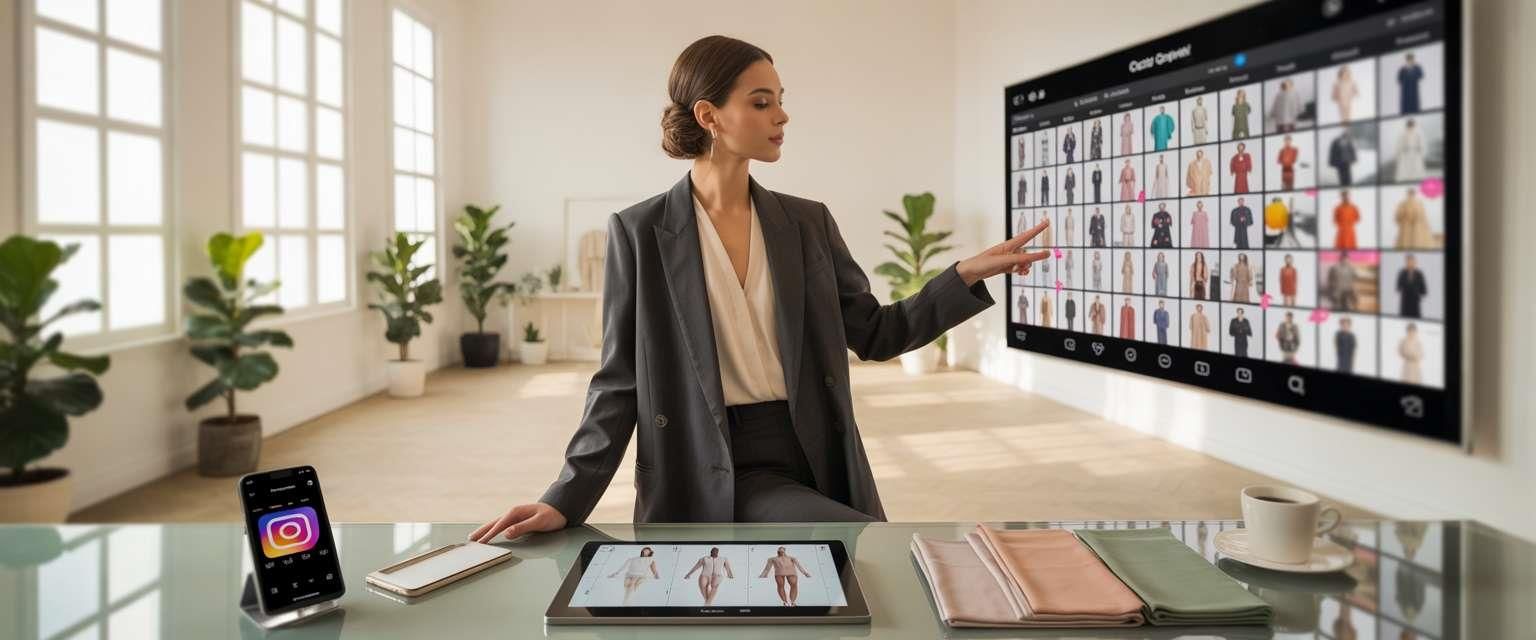
Fashion is an inherently visual industry, which makes visual planning essential for Instagram success. Your content calendar should include thumbnail previews of each post to ensure your grid maintains aesthetic cohesion.
Consider how your posts will appear together on your profile grid. Many high-performing fashion brands use a "checkerboard" pattern, alternating between product shots and lifestyle images, or a "row-by-row" approach where each row of three posts follows a specific color scheme or theme.
For brands managing multiple product lines or marketplaces, Bulk Listing Creator can help generate consistent, on-brand content across different platforms. This tool enables fashion brands to create professional product descriptions, titles, and bullet points in bulk, ensuring brand consistency across Instagram Shopping posts and other sales channels.
Step 5: Create a Content Creation Workflow
A content calendar is only as good as your ability to execute it. Establish a clear workflow that includes:
Content Ideation (1 week before posting): Brainstorm and approve post concepts based on your calendar structure.
Content Creation (3-5 days before posting): Produce photos, videos, graphics, and copy. This buffer allows for quality control and adjustments.
Content Review and Approval (2 days before posting): Ensure all content aligns with brand guidelines and marketing objectives.
Scheduling and Publishing (1 day before posting): Use scheduling tools to automate posting at optimal times.
Performance Monitoring (ongoing): Track engagement metrics and adjust your strategy based on what resonates with your audience.
For brands looking to optimize their entire social media management process, professional services can handle everything from content creation to community management, allowing you to focus on your core business while maintaining a strong Instagram presence.
Step 6: Integrate Shopping Features and Conversion Elements
A high-converting content calendar must seamlessly integrate shopping features. Instagram Shopping allows fashion brands to tag products directly in posts and Stories, creating a frictionless path from discovery to purchase.
Tag products in at least 40% of your posts to maximize shoppability. Use Instagram's Product Launches feature for new collection drops, creating anticipation and urgency. Include clear calls-to-action in your captions, directing followers to "Shop the Look," "Swipe Up," or "Link in Bio."
Beyond organic posts, allocate space in your calendar for promoted content. According to research, fashion brands that strategically invest in performance marketing see significantly higher conversion rates. Plan your paid content alongside organic posts to create a cohesive strategy that amplifies high-performing content.
Step 7: Incorporate Influencer Collaborations
Influencer marketing remains one of the most effective strategies for fashion brands on Instagram. Micro-influencers generate 20% higher conversion rates in niche fashion segments compared to mega-influencers, making them valuable partners for emerging and established brands alike.
Build influencer collaborations into your content calendar at strategic moments—product launches, seasonal campaigns, and major shopping events like Black Friday. Plan for:
- Unboxing videos and first impressions
- Styling challenges featuring your products
- Behind-the-scenes content from influencer perspectives
- Takeover days where influencers manage your Instagram Stories
Professional influencer marketing services can help you identify the right partners, negotiate contracts, and manage campaigns that align with your content calendar and business objectives.
Step 8: Plan for Real-Time Engagement and Flexibility
While a content calendar provides structure, it must also allow for flexibility. Reserve 20% of your content slots for real-time, spontaneous posts that capitalize on trending topics, viral moments, or unexpected opportunities.
Monitor trending audio clips and hashtags daily. When you spot a trend that aligns with your brand, create content quickly to ride the wave. Fashion brands that successfully leverage trending content often see 3-5x higher reach than their average posts.
Build "agile content days" into your calendar—designated times when your team can create and publish timely content without disrupting your planned schedule. This approach ensures you maintain consistency while staying relevant and responsive.
Step 9: Track, Analyze, and Optimize
A high-converting content calendar is never static—it evolves based on performance data. Track key metrics for every post:
- Engagement Rate: Total engagements divided by reach (aim for 0.45% or higher)
- Reach and Impressions: How many unique users see your content
- Saves and Shares: Strong indicators of valuable content
- Link Clicks and Conversions: Direct ROI metrics
- Follower Growth Rate: Overall account health indicator
According to Socialinsider's 2025 benchmarks, the average engagement rate on Instagram is 0.45%, with carousels leading at 0.55% and Reels at 0.50%. Compare your performance against these benchmarks and adjust your content mix accordingly.
Review your analytics monthly and update your content calendar based on what's working. If you notice that styling tutorial Reels consistently outperform product-only posts, shift more calendar slots toward educational video content.
Many brands benefit from comprehensive monthly reports and analysis that provide actionable insights. Professional social media management services include detailed analytics and reporting that help you make data-driven decisions about your content strategy.
Step 10: Automate and Streamline with Tools
Building a high-converting content calendar becomes significantly easier with the right tools. While many premium scheduling platforms exist, fashion brands can also benefit from specialized tools designed specifically for e-commerce and content creators.
Explore the 50+ free tools from Emerge that can support various aspects of your content calendar management, from content idea generation to campaign ROI tracking. The Content Calendar tool specifically helps fashion brands plan and schedule social media posts around key events and holidays to boost engagement and sales.
For brands selling across multiple platforms, having tools that integrate your Instagram content strategy with your broader eCommerce and marketplace management creates operational efficiency and ensures brand consistency across all customer touchpoints.
Step 11: Plan for Growth and Scalability
As your fashion brand grows, your content calendar needs to scale accordingly. What works for a brand with 5,000 followers differs from what works at 50,000 or 500,000 followers.
Small accounts (under 10K followers) should focus on niche content and community building, posting 3-5 times weekly with heavy emphasis on engagement.
Mid-sized accounts (10K-100K followers) benefit from increased posting frequency (5-7 times weekly) with greater content variety and more sophisticated campaigns.
Large accounts (100K+ followers) require dedicated teams, advanced analytics, and multichannel strategies that extend beyond Instagram.
Regardless of your current size, plan your content calendar with scalability in mind. Document your processes, create content templates, and establish clear brand guidelines that can be followed as your team expands.
For brands experiencing rapid growth, partnering with an agency that provides comprehensive website development and maintenance alongside social media management ensures your entire digital ecosystem grows cohesively.
Step 12: Test, Learn, and Iterate
The most successful fashion brands on Instagram treat their content calendars as living documents that continuously evolve. Implement A/B testing into your calendar planning:
- Test different caption lengths and styles
- Experiment with various Reels formats and durations
- Try different posting times within your optimal windows
- Compare product-focused content versus lifestyle content
- Test various calls-to-action
Document your findings and use them to refine your calendar templates for future months. What works in January might not work in June, and fashion trends evolve rapidly. Stay agile, remain curious, and always prioritize what your specific audience responds to over generic best practices.


